Opinion2 min read
Stop collecting prompts. Start keeping examples.
A folder of answers you liked teaches AI more than a list of clever wording.
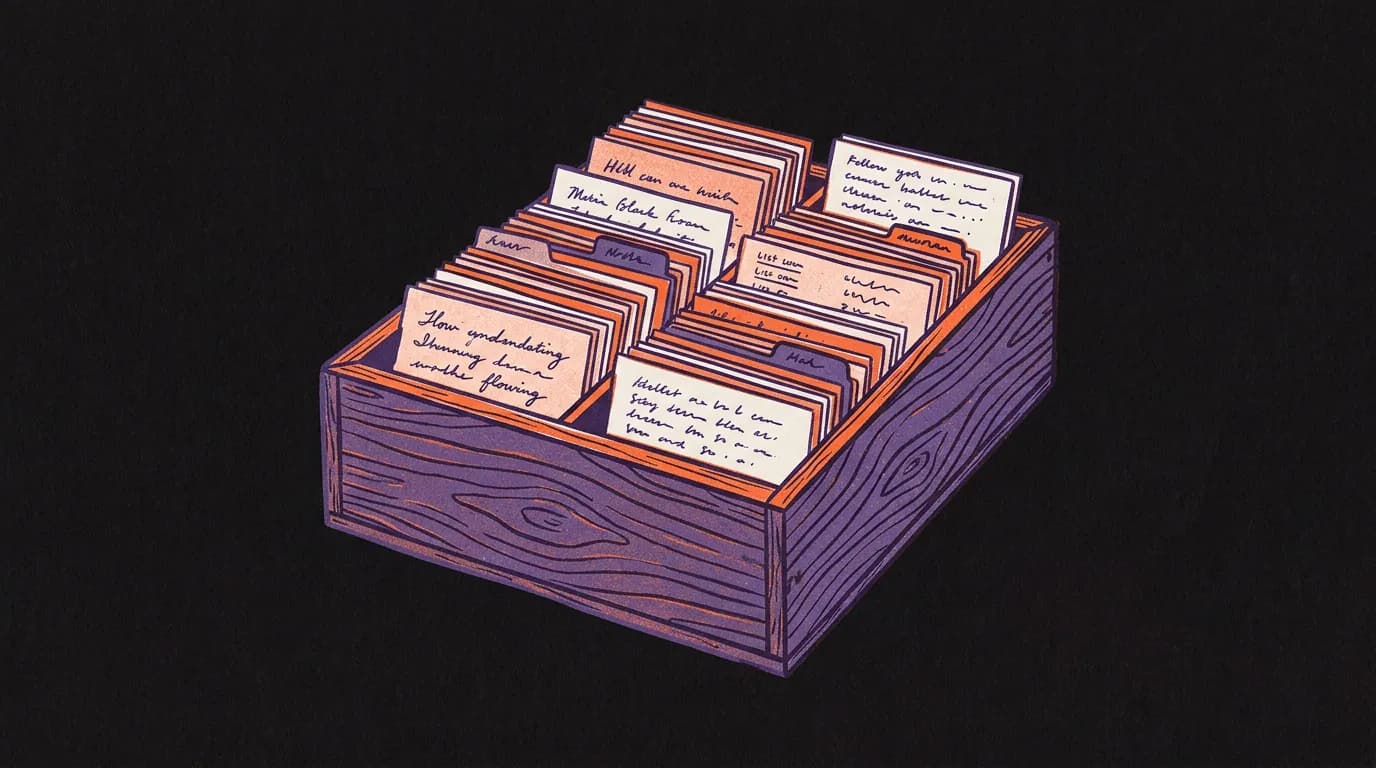
Many people save prompts. They keep notes full of clever phrases and templates from the internet. Then they open the note, copy a phrase, and get an answer that does not sound like them.
There is a better thing to save. Keep examples.
Why examples work
Try to describe a good email in words. You might say "friendly but professional, short, with a clear ask". That sounds fine, but two people will read it in two different ways.
Now show a real email you wrote that you like. There is no room for confusion. The AI can see the length, the tone, the way you open and the way you close.
Showing is clearer than telling. Colleagues know this. New team members learn faster from a finished report than from a page of rules.
What to keep
Start small. Make one folder and call it "Good work". Put in:
- Three emails you were happy with.
- One report or summary your manager praised.
- One answer from AI that came out exactly right.
- Anything you would hand to a new colleague and say, "like this".
Remove private details before you save anything. Do not keep customer names, contract numbers or anything you would not want in a shared drive.
How to use them
When you ask AI for help, paste one or two examples and add a short note:
Here are two emails I wrote that I like. Write a new one in the same style. The new email is about a late delivery.
That is a full prompt. It has a goal, an example and a task. You did not need a template.
Keep the folder alive
Every time AI gives you an answer you would send without changes, copy it into the folder. Every time you rewrite a draft so much that it sounds like you, save the final version.
After a month you will have a small library that is yours. It is better than any list you can download, because it matches your work, your tone and your readers.
What about prompts?
Some prompts are worth keeping. A short instruction that you use every week, such as "turn these notes into three action points", is useful. Save those too, next to the examples that go with them.
But a prompt with no example is a guess. A prompt with an example is a clear request.
Try it this week
Pick one task you do often. Find your best past result. Paste it into your next request and see what changes.
Want more practical notes like this? Browse the issue archive.